Two Days at Connect Karo 2026: Learning, Listening and Rethinking How We Work
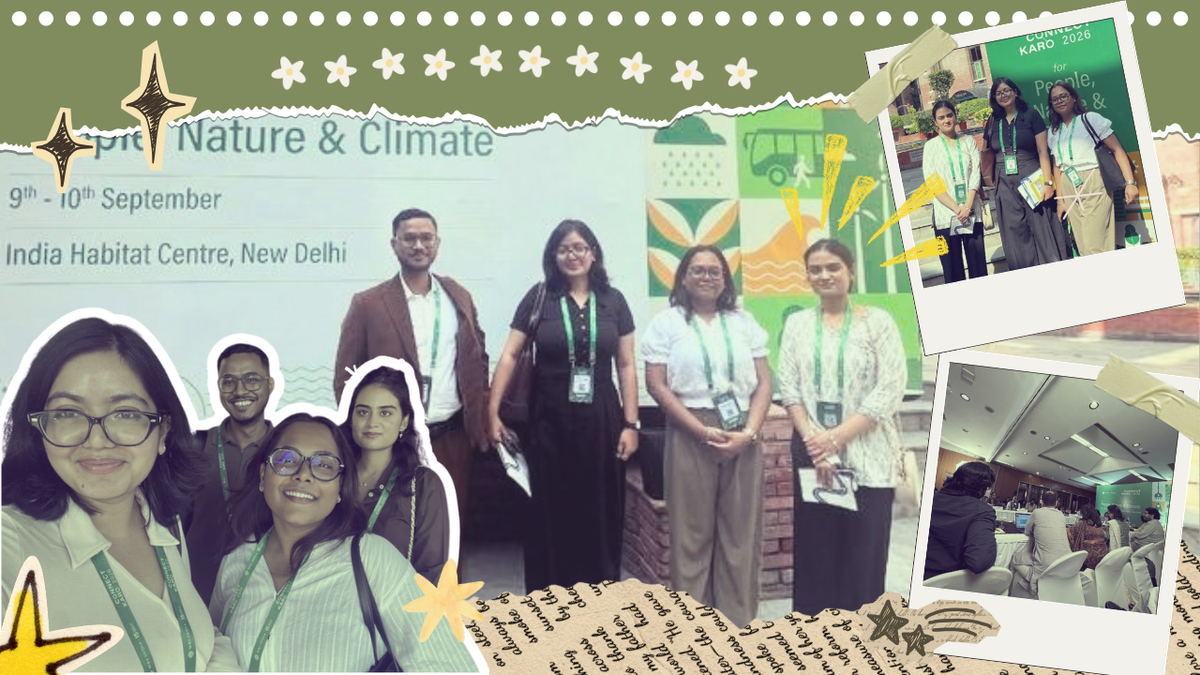
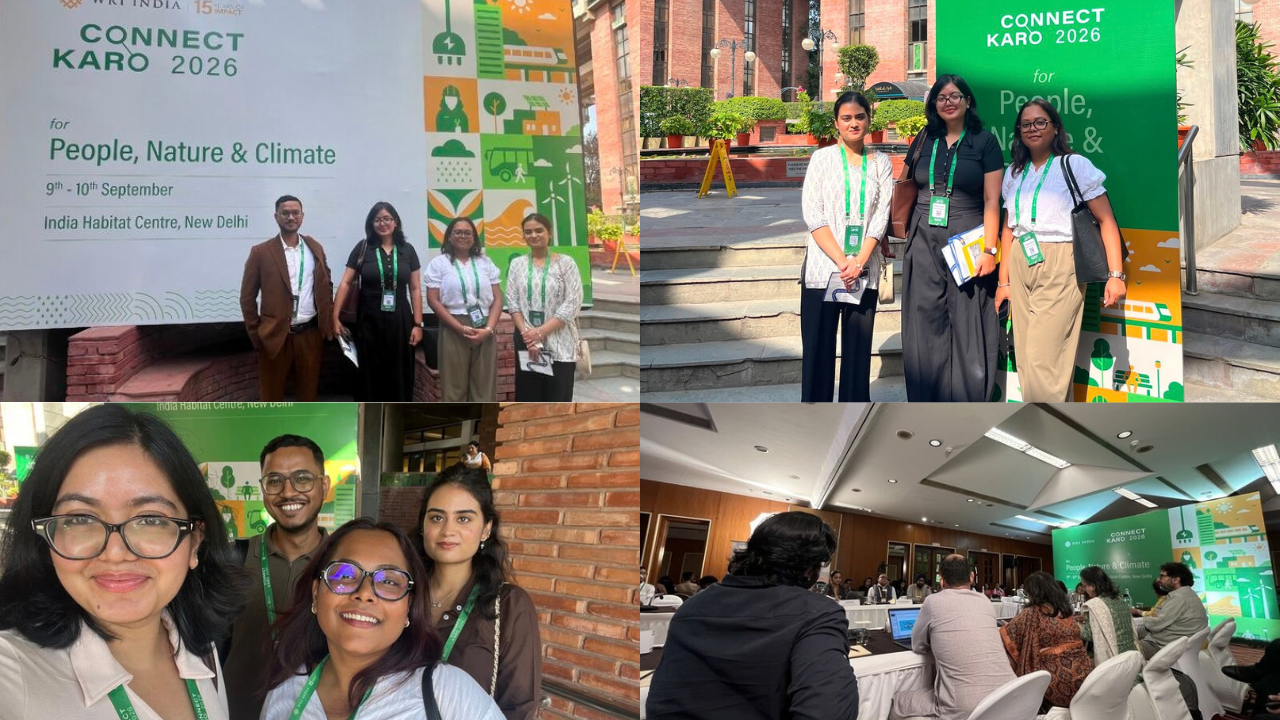
13th September,2026|For a small organisation, opportunities to step outside the day-to-day work and learn from people working across sectors can be incredibly valuable. That is exactly what the two days at Connect Karo 2026, WRI India’s flagship annual summit in New Delhi, offered our team. Our members, Niddhi Suman, Hunar Malik, Hasan Al Banna and Sapna Gupta spent two days attending discussions, exploring new tools and thinking about how some of these ideas could apply into the work that we do with communities.
Connect Karo became an opportunity to listen and rethink some of the ways organisations like ours approach governance, data, communication and urban development.
Day 1: Looking Beyond Compliance
One of the sessions we attended was “Governance Beyond Compliance: Unlocking Power, Partnerships & Practical Impact.” For organisations working in the social sector, governance and compliance can sometimes be treated as boxes that need to be checked. The session offered a wider perspective on them, highlighting how these processes can influence how an organisation makes decisions, builds partnerships and delivers projects. A key takeaway for us was the importance of having the right people involved at the right time. Good decisions do not happen in isolation. They require clarity about who needs to be involved, what information is available and how accountability is built into a project from the beginning rather than added later.
For a small NGO, these are particularly useful lessons. Limited resources mean that organisational processes need to be thoughtful and practical. The session gave us several ideas to take back and consider in the way we plan, implement and review our own work.
We were unable to stay for the session “Beyond the Numbers: Data, Storytelling and Communication,” but the subject was interesting and stood out. For organisations working with communities, data is important but numbers alone don’t really tell the whole story. How that information is communicated, contextualised and connected to people’s experiences can determine whether it actually reaches the people who need to understand it.
Day 2: Exploring WRI India’s Data Lab
Day two took us into WRI India’s Data Lab, where we explored a range of open-access tools, including GEM-India, ASCENT, Cool Cities Lab and others. Among the tools we encountered, the Public Spaces Assessment Framework (PSAF) particularly caught our attention. PSAF’s participatory approach made it more valuable. The framework was co-created with adolescents to assess public spaces from their perspective. That idea was especially relevant to us as an organisation that works closely with communities.
Urban spaces are often discussed through maps, statistics, infrastructure and planning documents. But the people who actually use those spaces experience them quite differently. Again, data doesn't really give you the full picture. Bringing young people’s perspectives into the process creates another layer of understanding something that cannot be captured through conventional data. It was a reminder that community participation is not about asking people just for opinions. It means creating tools and processes that allow their experiences to shape decision-making.
Another session we attended was “Pathways for Embedding Climate Resilience in Local Planning.” The discussion focused on an important question. How can city-level climate action plans move beyond documents and become practical interventions at the local level?
Several points stayed with us. First, data needs to be made usable. Having large amounts of information does not automatically make it useful. Data needs to be broken down and presented in ways that allow different actors to understand it and use it at the scale where decisions are actually being made. Second, climate resilience cannot be handled by one sector alone. Urban planning, infrastructure, transport, environment, governance and communities are interconnected. Effective local action, therefore, requires coordination across sectors. And finally, jurisdictional overlaps can complicate urban planning. When responsibilities are divided between different institutions and levels of government, knowing who is responsible for what can itself become a challenge.
These may sound like administrative questions, but they directly affect how quickly and effectively local interventions can take shape.
What We’re Taking Back With Us
Two days at Connect Karo 2026 gave us much more than a collection of sessions and presentations. We came away thinking about better governance, purposeful community participation, accessible data and collaboration across sectors and more importantly, about how these ideas can be adapted to the realities of organisations working on the ground. For us, learning is most useful when it eventually finds its way back into practice. What we hope to do with the conversations, tools and perspectives we encountered over these two days is to take them back to our work, discuss them with our team and see where they can make our own processes more effective.
A big thank you to WRI India and everyone involved in putting together two days filled with learning, discussions and new perspectives. We leave Connect Karo with plenty to think about and plenty to put into action.