No Vacant Seats: APNA’s Campaign for Inclusive Education in Jharkhand
On 5th Feb 2022, APNA representatives met Jharkhand’s Education Minister Shri Jagarnath Mahto to present a report on gaps in implementing the RTE Act. The report on awareness, illiteracy and monitoring led APNA to urge time bound steps, with the Minister assuring support for equitable education.
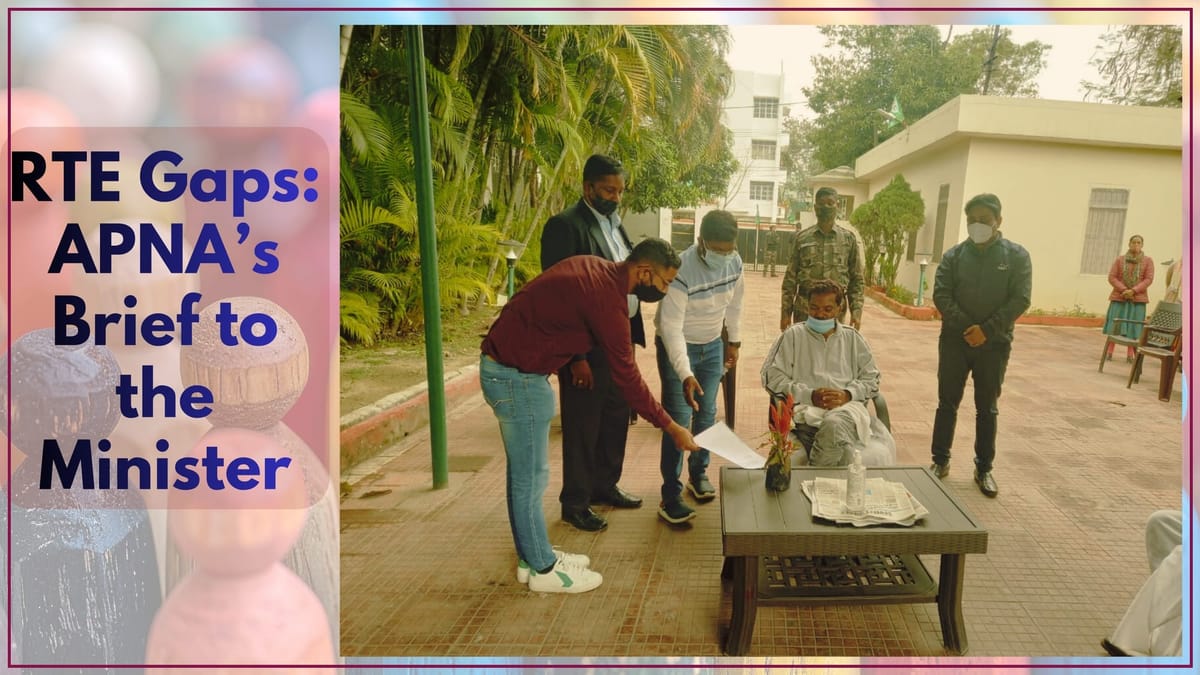
On 5th February 2022, representatives of the Association for Parivartan of Nation (APNA) met with Shri Jagarnath Mahto, the Honourable Education Minister of Jharkhand, to present our report on the contemporary challenges surrounding the implementation of the Right to Education (RTE) Act. The meeting was a significant milestone in our ongoing advocacy, and its importance was recognised by the media, with coverage appearing in The Telegraph, The Times of India, and Inext.
As organisers, we approached this meeting with a dual purpose: first, to share the empirical findings of our field research, and second, to ensure that the voices of the most affected families were carried into the highest levels of government.
The report presented to the Minister drew attention to several pressing gaps in implementation. Among these were the lack of awareness among eligible families about their entitlements under the Act, the persistence of digital illiteracy among parents, and the inconsistent monitoring of private schools that are mandated to admit children from underprivileged backgrounds under Section 12(1)(c). These shortcomings, we emphasised, undermine the spirit of the Act and risk entrenching the very inequalities it was designed to dismantle.
Our appeal to the Minister was direct: to take concrete, time-bound measures to ensure full compliance with RTE provisions for the 2022–23 academic year. We underscored the need for transparent monitoring, awareness-building at the grassroots, and accountability mechanisms robust enough to guarantee that no child is excluded on account of systemic inefficiencies.
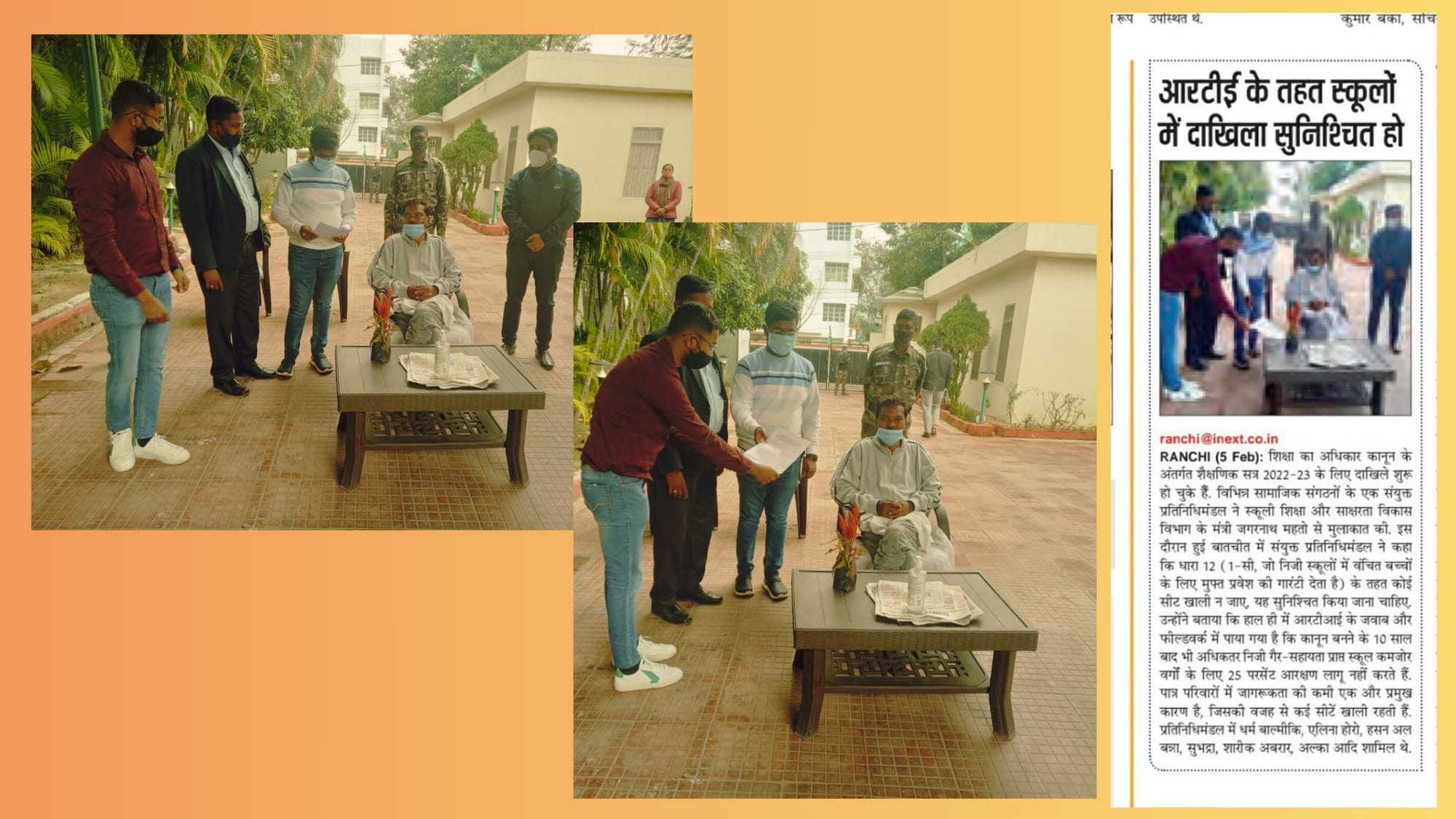
The Honourable Minister responded with an assurance that was both encouraging and sobering in its recognition of responsibility:
“Civil society initiatives like these remind us of our responsibility to the people. We will work to ensure that no child is denied education because of systemic delays.”
For APNA, this engagement was more than a formal presentation of findings. It was a reminder of the power of sustained civic advocacy in holding institutions accountable and in influencing public policy. The meeting reinforced our mission of building an inclusive and equitable education system, where every child- irrespective of caste, class, or income- possesses the opportunity not merely to attend school, but to dream, learn, and thrive.
As organisers, we left the meeting with renewed determination. While challenges remain, the Minister’s words and the attention drawn by the press demonstrate that collective efforts can amplify the voices of the marginalised, ensuring they are heard where it matters most.