APNA Field Dispatch | April 2026 Listening at the door
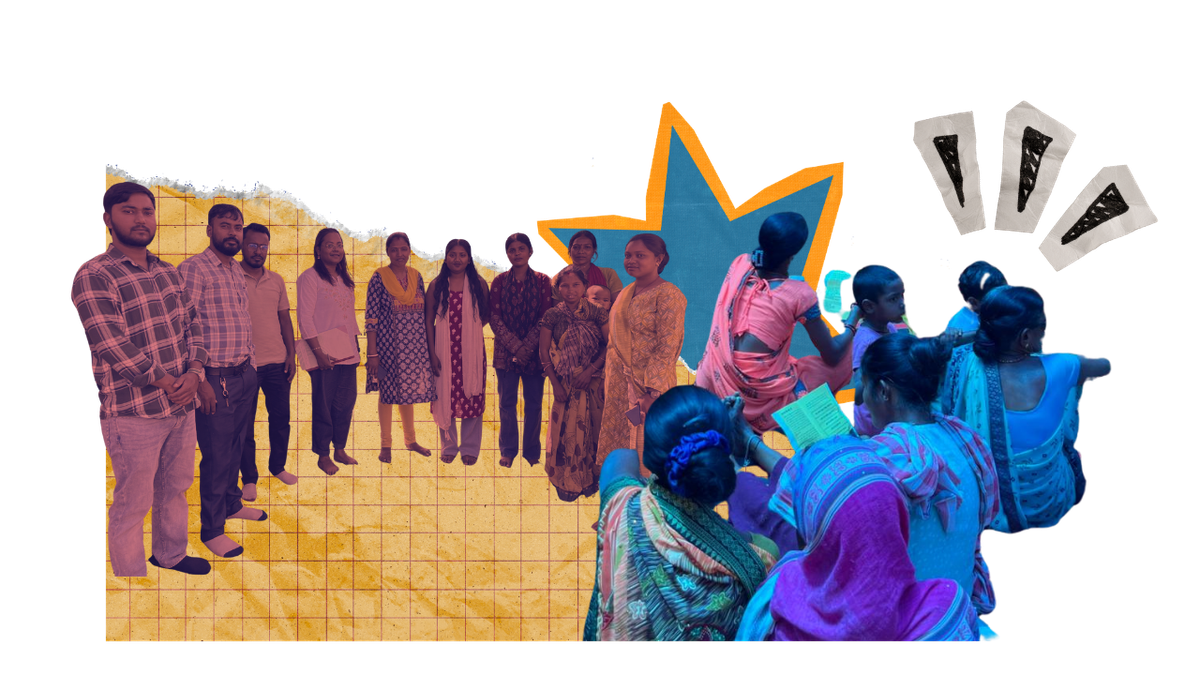
April was the month APNA went looking for people where they actually are — in informal settlements without clean water, in homes where women cannot leave for work because there is no one to watch their children, in pension queues that have gone silent for months, and in online rooms where people are quietly figuring out what their lives could look like.
It was a month of listening. And what the team heard was specific, urgent, and worth documenting carefully.
Two camps, one neighbourhood, one long day
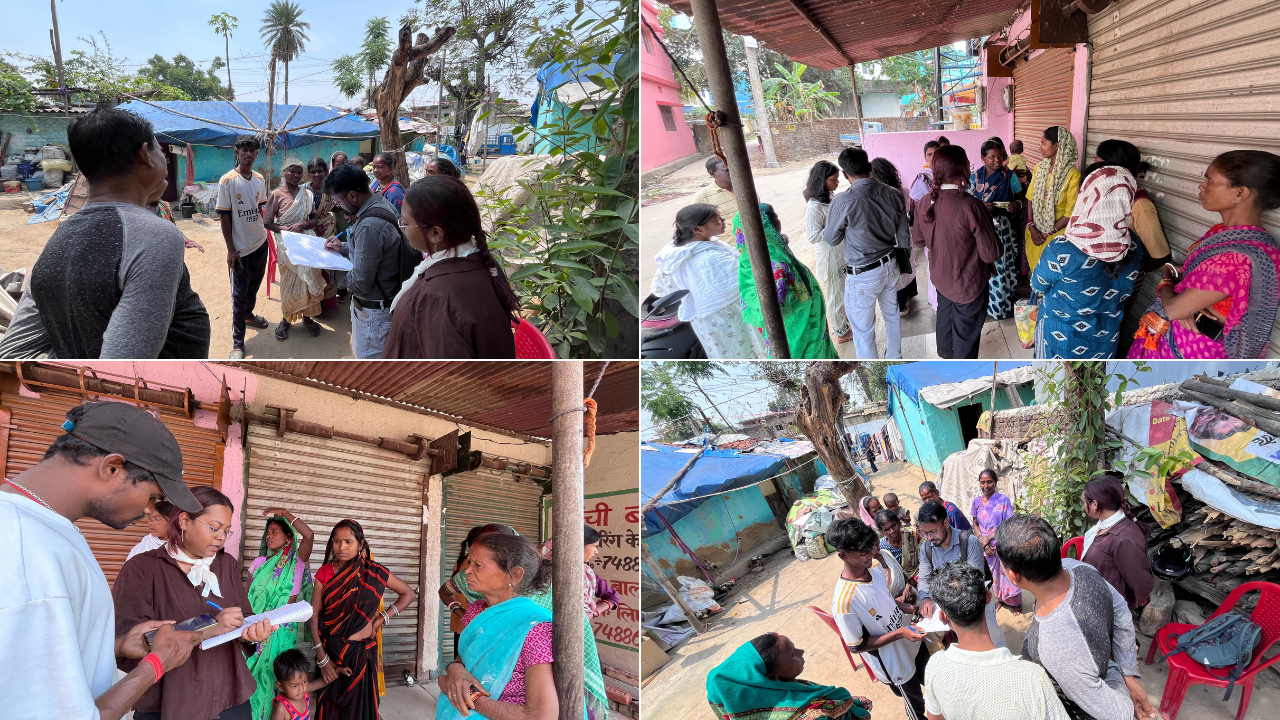
On the 3rd of April, the team spent a full day in Lowadih.
The morning took them to Malharkocha — an area of informal settlement where APNA went door-to-door, not with a fixed agenda, but with a survey and a willingness to listen. Twenty-six households engaged. The team collected baseline data and, in the same breath, told people what they were actually entitled to. Ward Parsad Kulbhushan Dungdung and community leader Mamta Kujur made both the access and the trust possible.
By afternoon, the team had moved to Tukitoli, still in Lowadih. Twenty-two more families, this time focused on Maiya Samman and pension schemes. Door-to-door again. The work was quiet and unhurried. In informal settlements, that pace matters.
Fifty women in Mausibadi
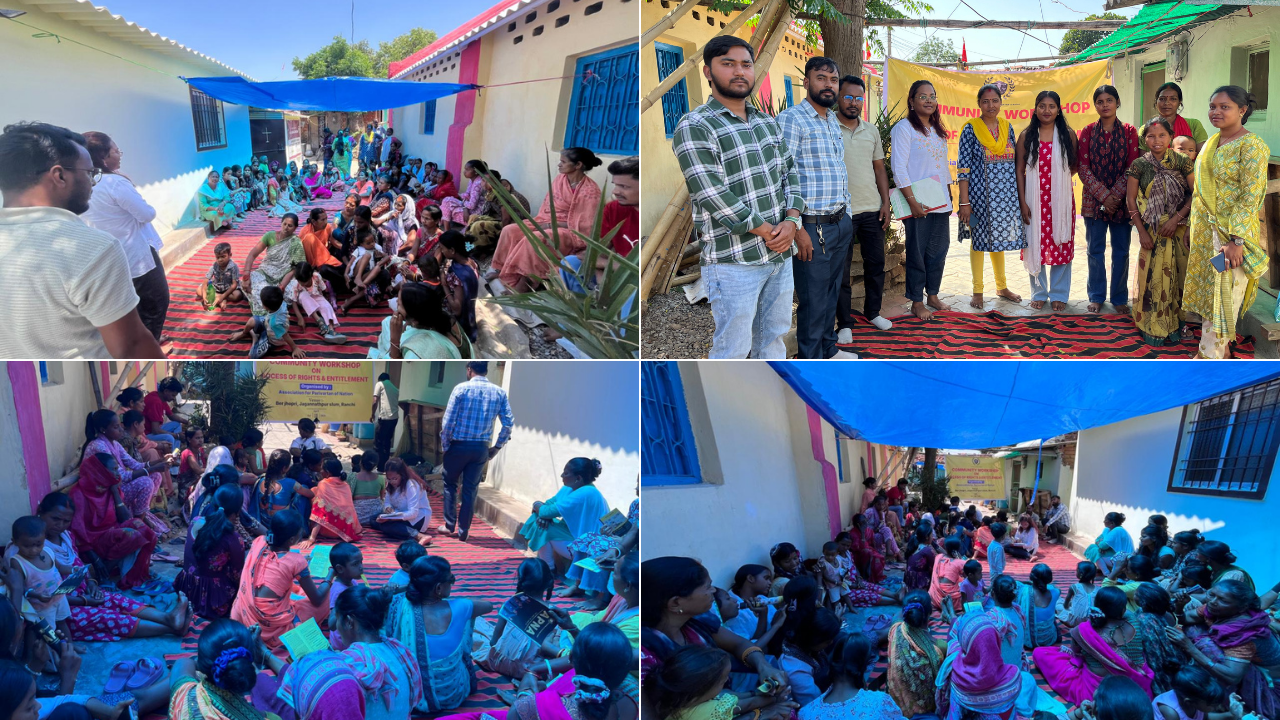
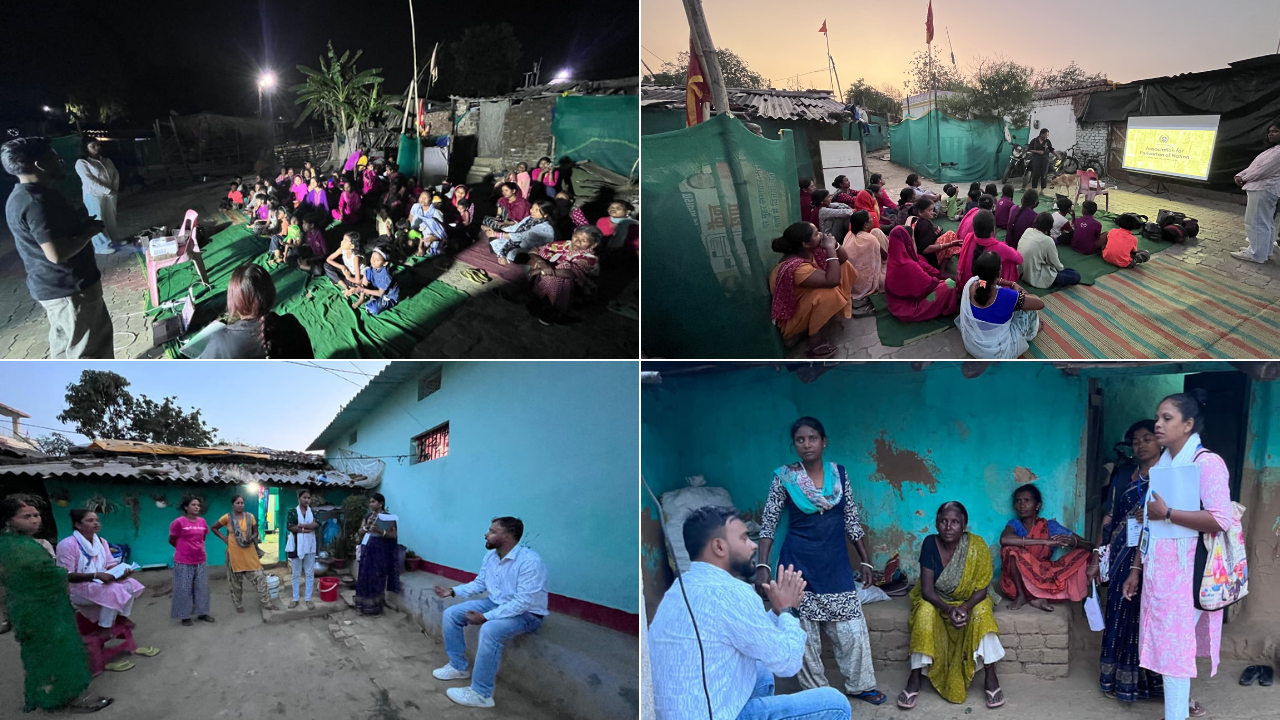
APNA had been to Mausibadi in February. Then March. By the 11th of April, the community knew the team well enough to show up in numbers: over fifty women gathered, many with their children in tow, for a workshop on entitlements and everyday challenges. Community anchor Anamika helped bring them together.
What followed was one of the most candid conversations of the month. Women spoke about not being able to go to work because they had no one to leave their small children with. Older women described how their pensions had been stopped — without explanation, without recourse — and how they were now living off savings that wouldn't last. Administrative failures with deeply human consequences.
This is the third time APNA has visited Mausibadi. The community is no longer a new contact. It is a relationship. That continuity is starting to show.
Lanka Colony: water, documents, and walls
Two days later, on the 13th, the team was in Lanka Colony, Jagannathpur in an informal settlement. Isha Kumari helped organise the gathering; twenty-eight people came. The conversation turned quickly to two problems that kept circling back to each other.
The first was water. The colony doesn't get enough, and the people living there know exactly why and exactly how long it has been this way. The second was documentation or rather, the absence of it. Wrong addresses on certificates. Applications rejected before they're even read. The cycle of trying and being turned away, trying again and being turned away again. For communities without formal land tenure or stable addresses, the document system doesn't just inconvenience it excludes.
A visit to Bariatu
On the 17th, the team went to Bariatu Basti with Bina Kujur, APNA's community champion there. The visit was quieter — ten people, an evening conversation. The purpose was to meet existing beneficiaries, understand what documents they were still missing, and check on where the entitlement application process had stalled for them. It was the kind of follow-up visit that doesn't generate big numbers but is essential to the work actually meaning something.
What April is telling us
Three things stood out this month.
The first is infrastructure failure. Water scarcity in Lanka Colony. Stopped pensions in Mausibadi. Wrong addresses on documents. These are not individual problems — they are systemic ones, and they keep showing up across different communities in different forms.
The second is the value of return visits. Mausibadi, now visited three months in a row, produced the largest and most open gathering of April. Bariatu, revisited through Bina Kujur, is slowly becoming a place where people feel comfortable enough to say what they actually need. Trust is built by coming back.
The third is the range of what APNA is now doing and that breadth is a strength, as long as the thread connecting all of it — rights, access, dignity — remains visible.
April covered a lot of ground. Some of it is literal, on foot, door to door. Some of it is harder to map.
Team APNA | Jharkhand | April 2026