Tribal Echoes
The Tribal Echoes Lecture Series (8–10 June 2021), dedicated to Birsa Munda, brought together activists, scholars, artists and engaged 12933 people on YouTube and Facebook. Sessions on education, caste, violence, extraction, music and storytelling affirmed tribal identity and youth leadership.
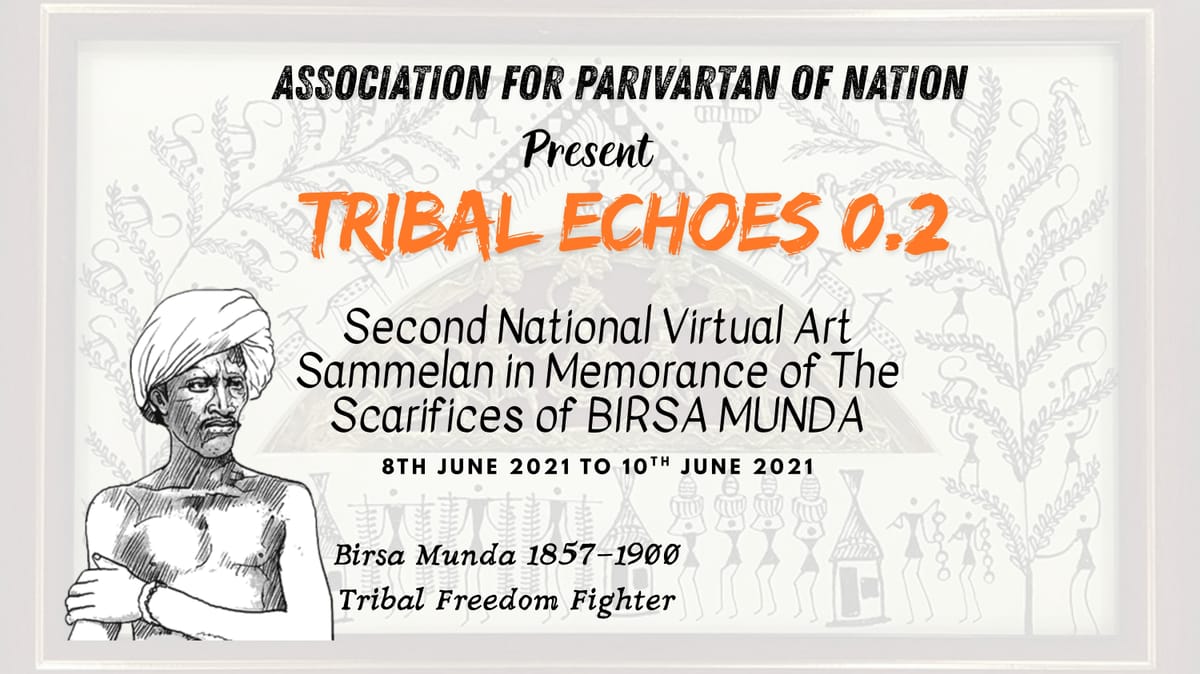
The Tribal Echoes Lecture Series (8–10 June 2021) marked the second national virtual gathering of its kind, bringing together voices from across India to celebrate tribal art, culture, literature, and representation. Dedicated to the memory of Birsa Munda, the programme combined dialogue, performance, and reflection, drawing from the lived experiences of activists, scholars, artists, and community leaders.
Held entirely online via YouTube and Facebook, the series reached hundreds of people.
As one of the organisers, Sapna Gupta, noted, “We wanted to create not just an academic space, but a people’s platform where tribal voices are heard on their own terms.”
Day One- 8 June 2021
Education as a Form of Resistance
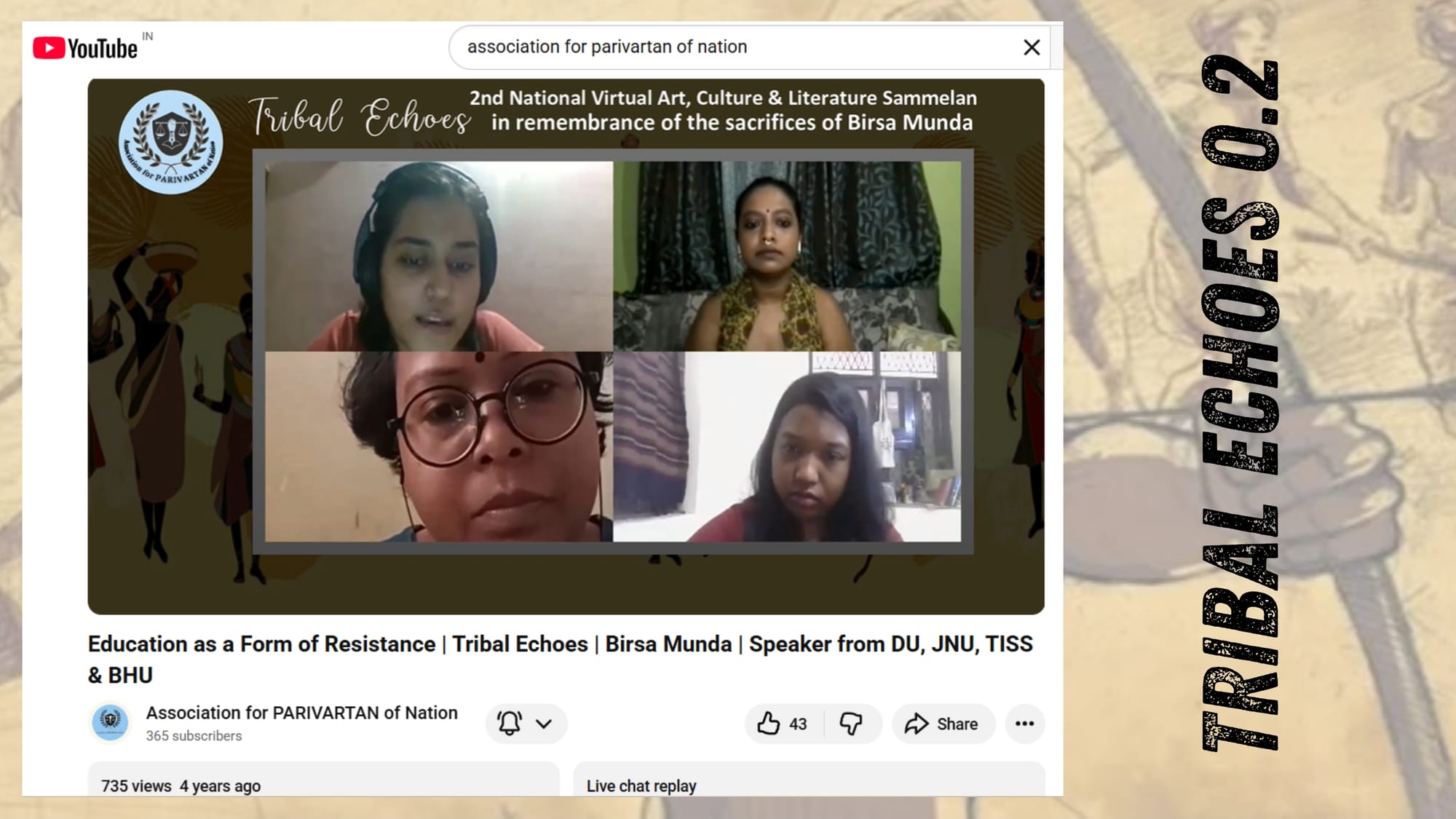
The opening session featured Akriti Lakra (activist), Deepti Mary Minj (Cambridge scholar), and Neetisha Khalkho (Delhi University faculty), moderated by Soumya Pandey, a well-known researcher.
The conversation emphasised how education empowers tribal youth to resist systemic exclusion.
“Education is not charity. It is our weapon of resistance and a path to equality,” said Akriti Lakra.
Many shared personal reflections in the live chat. One participant, Santosh from Gumla, wrote, “Hearing someone from our own community speaking about Cambridge gave me hope for my daughter’s future.”
The Portrayal of Caste in Bollywood: Examining Marginalised Narratives- E-Charcha
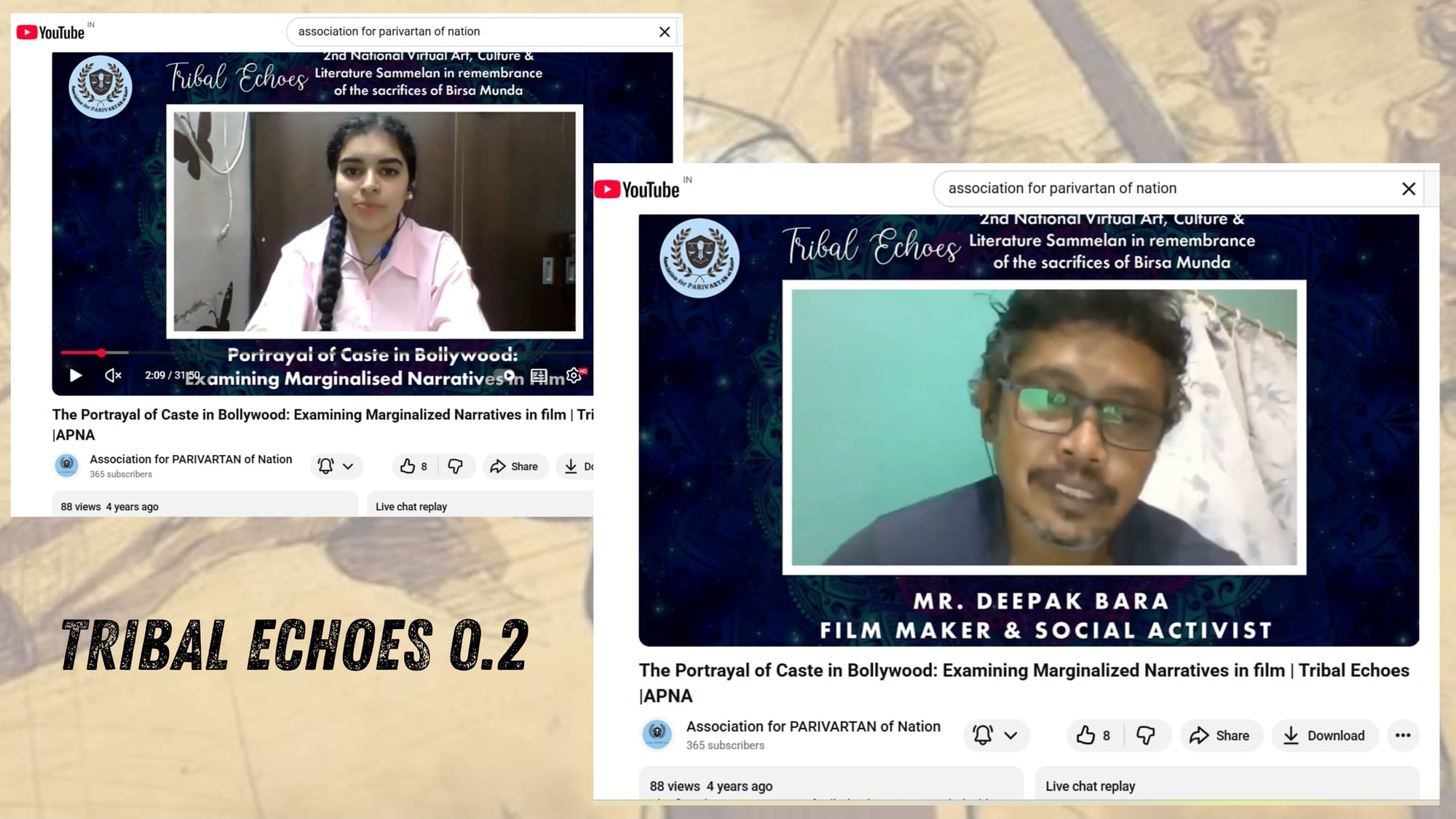
Filmmaker Deepak Bara led this lively evening discussion moderated by K. R. Swathi. Bara critiqued Bollywood’s limited representation of caste realities.
“When our stories are absent from cinema, our struggles are erased from collective memory,” he remarked.
The session ignited conversations among students and film enthusiasts. A university student commented, “For the first time I realised why I never see characters like my community on screen- it motivated me to pick up the pen.”
Day Two- 9 June 2021
Who Will Watch the Watchman? Birsa Munda’s Custodial Deaths and Police Atrocities

An Open House discussion, moderated by Iqra Ilham, featured Adv. Shailesh Poddar and Adv. Siddharth Lamba (CHRI). The speakers traced police violence from Birsa Munda’s custodial death to present-day atrocities.
“Accountability is not a choice. Without it, impunity thrives,” said Adv. Poddar. Senha, a participant from Khunti, reflected, “It felt like Birsa Munda’s struggle is still alive today. Justice delayed is justice denied.”
Exploiting Sacred: Natural Resource Extraction on Native Tribal Land- E-Chintan Shivir
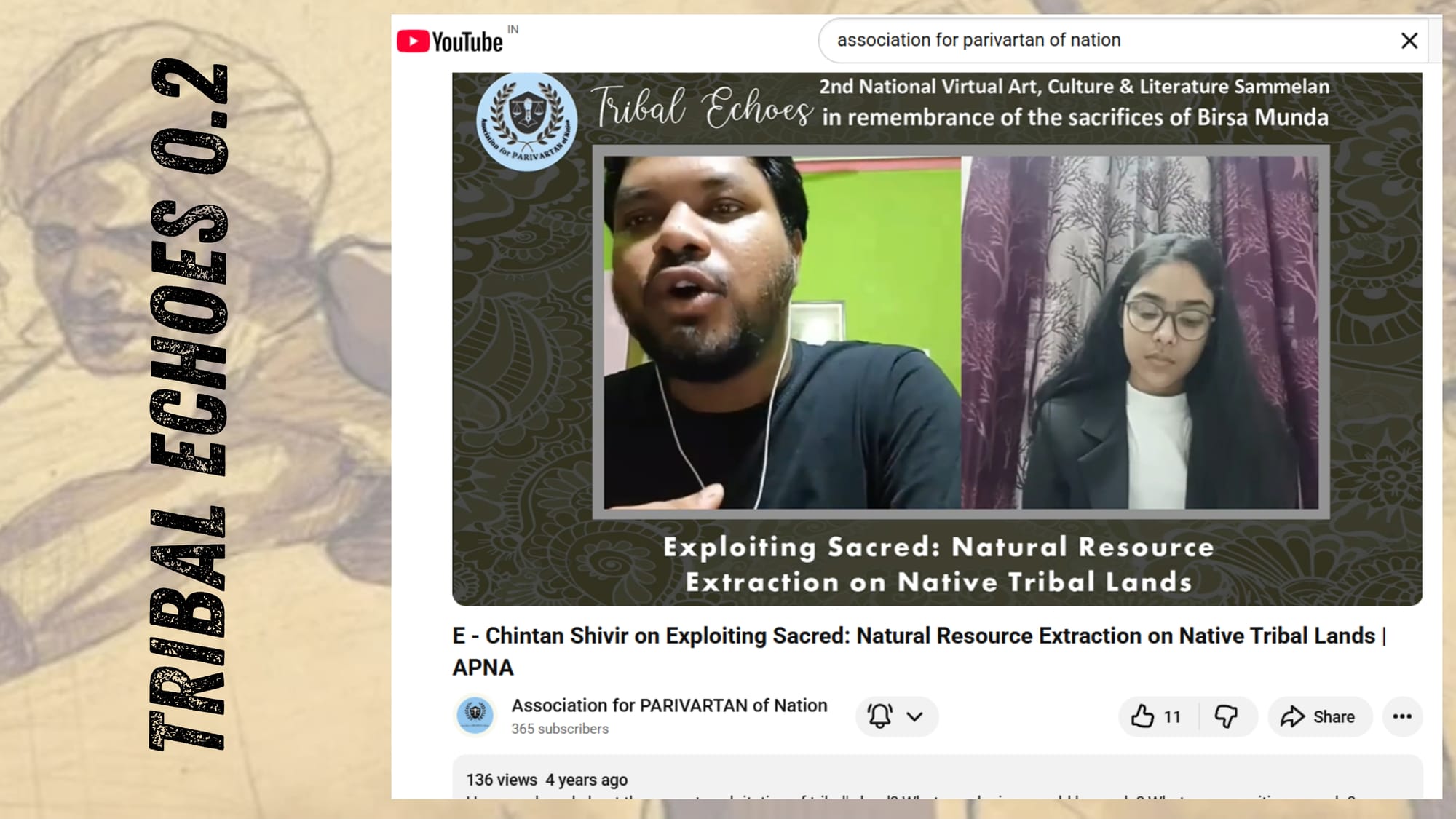
At 3 PM, nuclear activist Ashish Birulee, moderated by Vishakha Singh, addressed the ecological and cultural devastation caused by mining and resource extraction.
“When the forest dies, our gods die too. Resource theft is not development, it is cultural destruction,” Birulee declared.
A local leader from Hazaribagh added, “This is not economics, it is survival. We need allies who understand this.”
Popular Ideas of Masculinity and Gender Inclusion in Tribal Communities- E-Chaupal
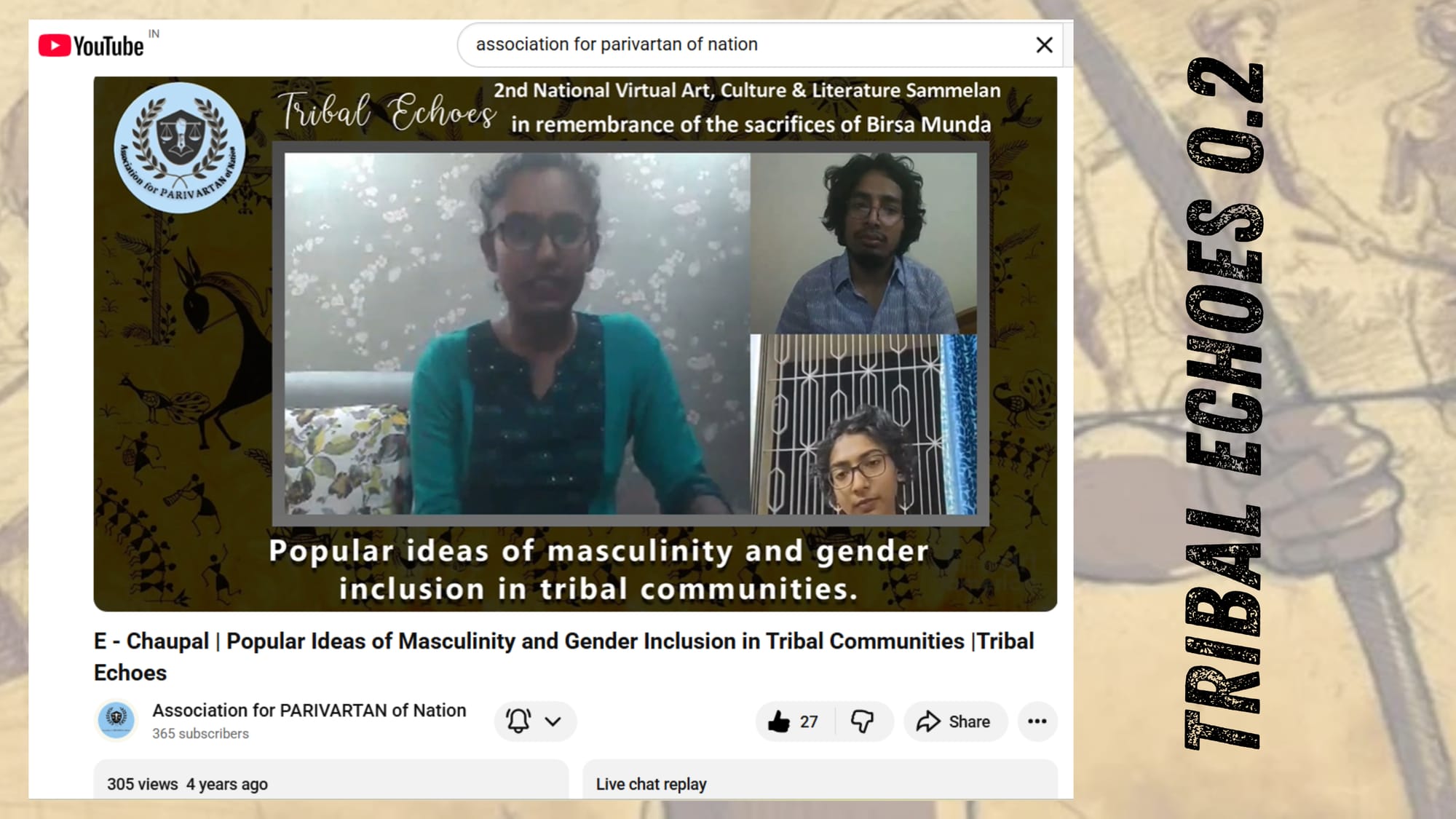
The evening session brought Ashish Kerketta (JNU) and Nidhi Kachhap (JNU) together, moderated by Pallavi Pratibha (TISS alumna). The speakers explored how rigid gender norms affect women and men alike in tribal settings.
“True empowerment means reimagining masculinity as inclusive, not dominant,” said Nidhi.
A participant from Ranchi commented, “This session helped me see gender not as a fight between men and women, but as a way to stand together.”
Day Three- 10 June 2021
Including the Excluded: Marginalised Children and the Right to Education- E-Colloquium
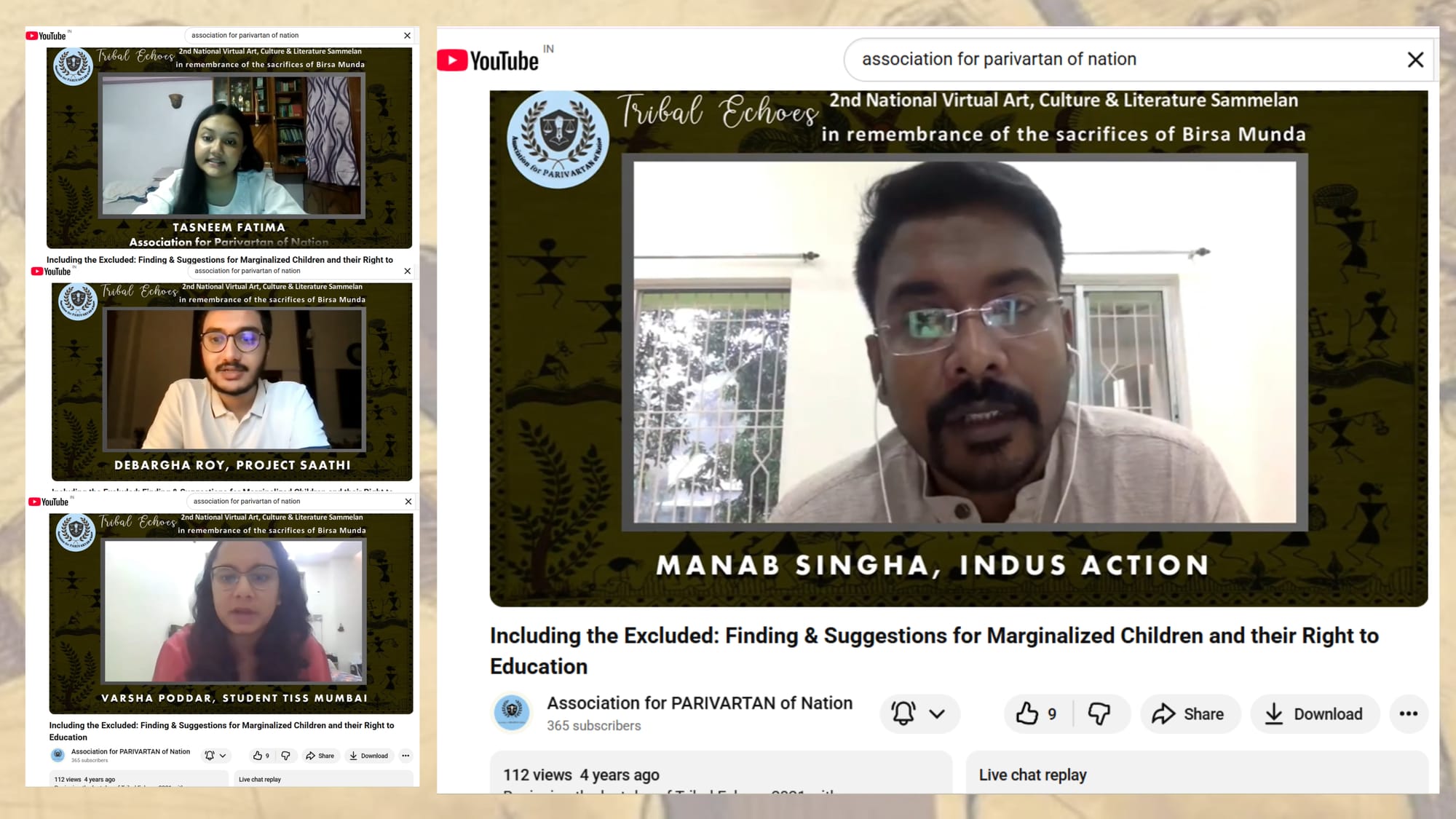
Speakers Manab Singha (Indus Action), Debargha Roy (Project Saathi), and Varsha Poddar discussed systemic barriers to education. Moderated by Tasneem Fatima, the session hosted hundreds of viewers.
“Education must begin with dignity- only then can it be transformative,” said Debargha Roy.
Resistance and Identity through Music- Baithak Performance by ATRIPT
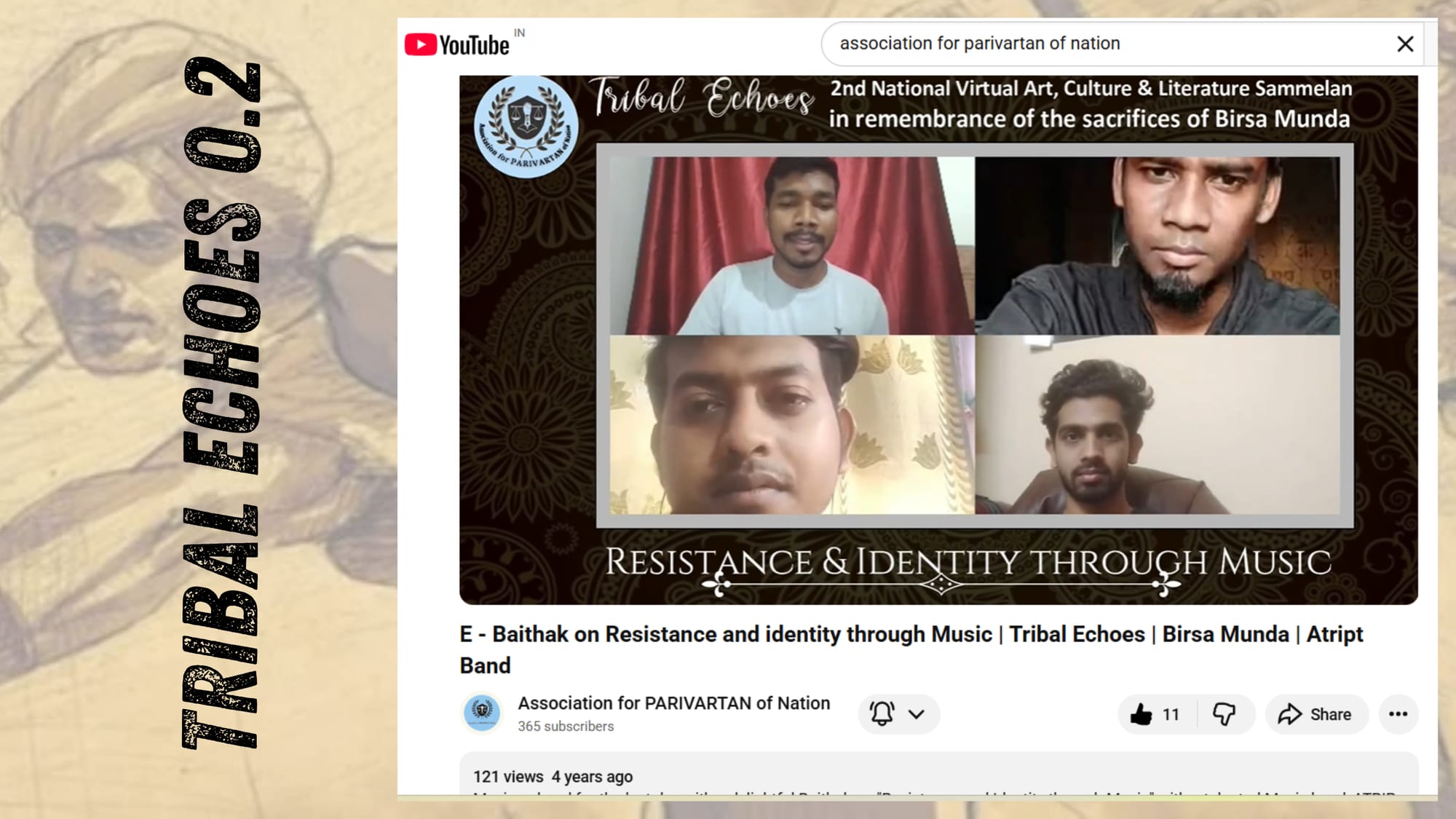
The afternoon featured a Cultural Baithak by ATRIPT, themed around resistance through music. Their motto, “Abua Desh, Abua Raaij” (Our Land, Our People), struck a chord with attendees. Though intimate, with 100 participants and 115 reached, it was deeply moving.
“Our music is our history- each note is a story of resistance,” said Ashwin Deogam, the lead vocalist.
Emerging Tribal Youth Leadership
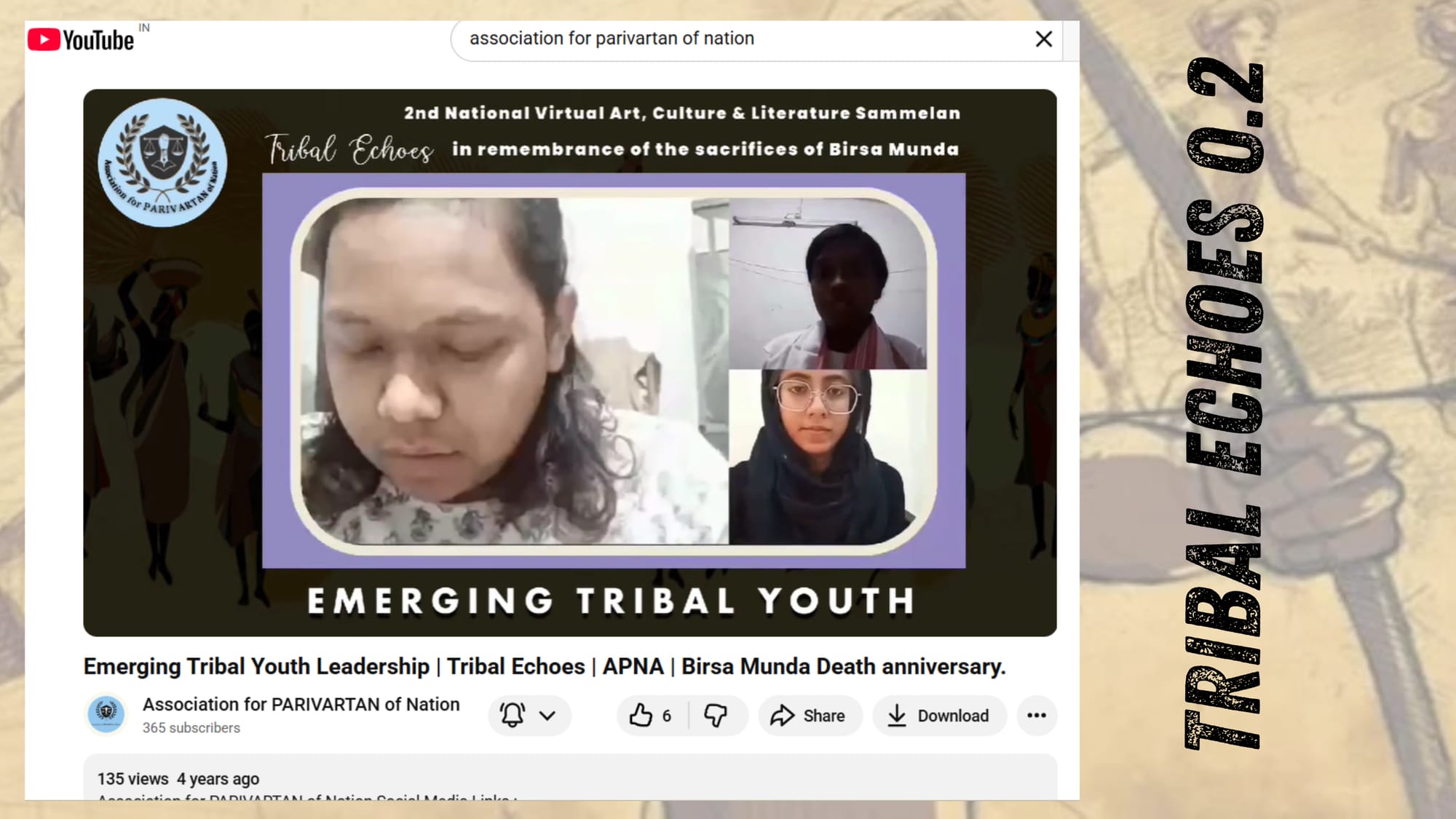
The concluding session, moderated by Afifa Ahmed, featured Garima Topno and Jenny Toppo (AICUF Jharkhand President), wrapping the series on a motivational note. “Youth are not the leaders of tomorrow; they are leaders now,” Jenny Toppo affirmed.
A participant, Praveen Tudu from Patna, shared, “Hearing young tribal women as leaders made me believe I too could take on responsibility.” As organiser, Sapna Gupta, summed up,
“Every statistic is a story, and every story is a step towards justice. Tribal Echoes was our way of keeping Birsa Munda’s spirit alive in a digital world.”
