Team APNA at AGAMI Justice Makers Mela 2025
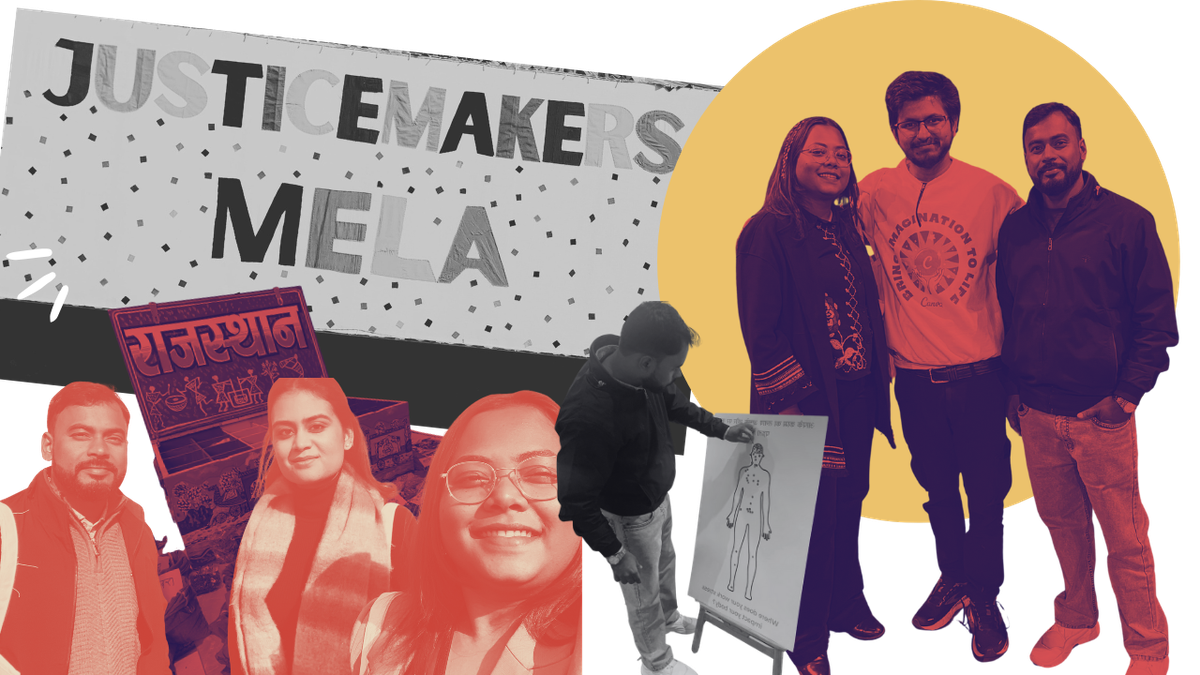
APNA attended Agami’s second Justicemakers Mela on 06–07 December 2025 in Jaipur, a space that brought together organisations, artists, lawyers, activists and community practitioners working across questions of justice, culture and climate. Our team got the opportunity to listen, exchange and ground our work within wider movements.
Day One opened with extended conversations at the Mela. We spent time at the stall of Atmashakti Trust, learning about their upcoming Yatra supporting tribal communities across India. Their work in Jharkhand on preserving local agricultural traditions through cereals and spices aligned with APNA’s engagement with indigenous knowledge systems. Discussions explored potential collaboration around APNA’s annual Tribal Echoes event, particularly through storytelling and art as tools of preservation and resistance.
We also connected with Community of Hope and Support (COHAS), a Delhi-based organisation using art-based education. Children from COHAS performed at the event, offering a reminder of how cultural spaces can centre young voices. Conversations focused on sharing APNA’s work and exploring future intersections.
A highlight of the day was Dalit Subbaiah: Voice of the Rebels, a moving session that wove Babasaheb Ambedkar’s words into a regional song, grounding political thought in cultural expression. The day concluded with continued engagement across stalls, informal exchanges, and attendance at multiple sessions. Throughout the day we got to value shared spaces for cross-sector dialogue.
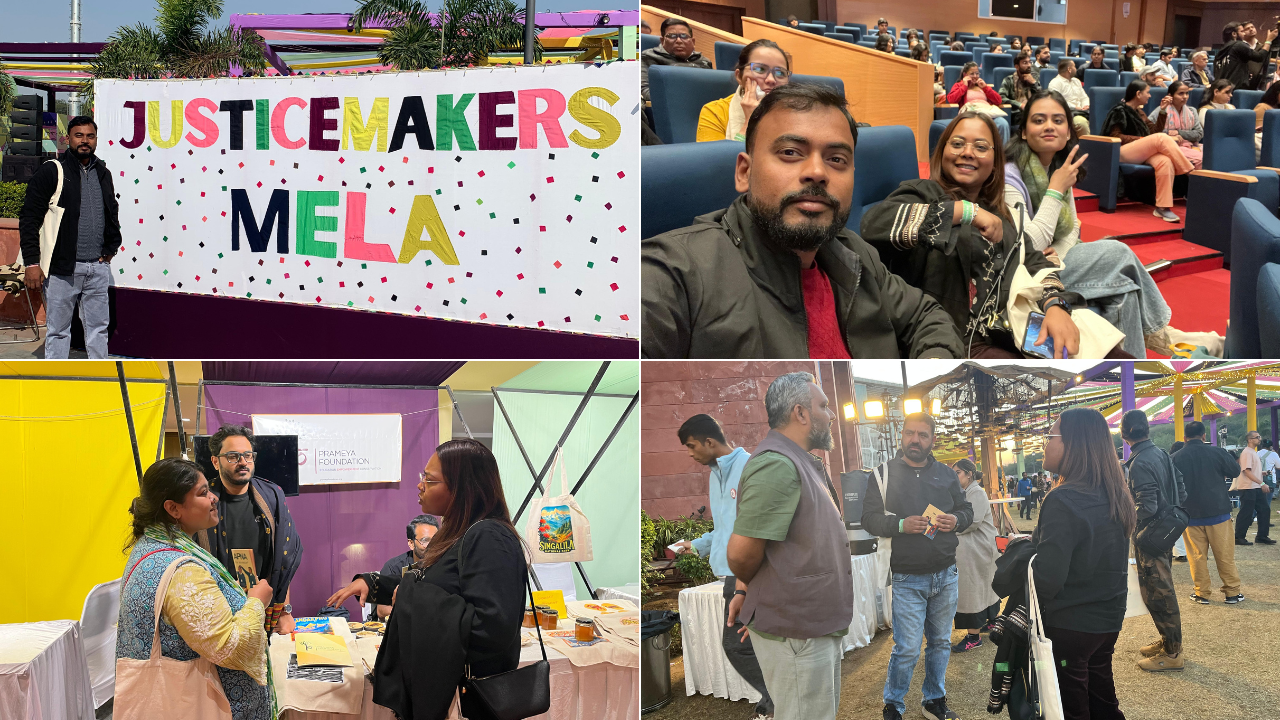
Day Two foregrounded climate justice and collective futures. An interaction with World’s Youth for Climate Justice and advocate Gunjan Soni stood out, particularly discussions around an upcoming South Asia climate conference planned for March, aimed at producing a policy-oriented outcome. APNA shared its zine and identified this as a priority area for potential collaboration.
Sessions on Digital Commons highlighted community-built Malayalam and Telugu dictionaries for collective knowledge creation. Environmental concerns were further explored through The Trail of Venkatiah – Ek Haathi Ki Kahani and Save Our Aravalis, the latter prompting active participation from APNA, including signing a letter urging safeguards against recent legal changes affecting the Aravali range.
An interactive workshop, Make a Climate Plan, Together, invited participants to think through long-term climate impacts on India’s coastal regions and imagine adaptive responses to displacement and ecological loss.
Alongside formal sessions, the team reconnected with long-time collaborators and peers. Conversations with Project Second Chance opened possibilities for future work around criminal justice and reintegration. The event concluded with Rajasthani folk performances, carrying a shared sense of commitment to collective action and sustained engagement.
This event taught us the importance of being present, listening closely, and situating APNA’s work within broader, interconnected struggles.