Project 21A: Bridging Policy and Reality
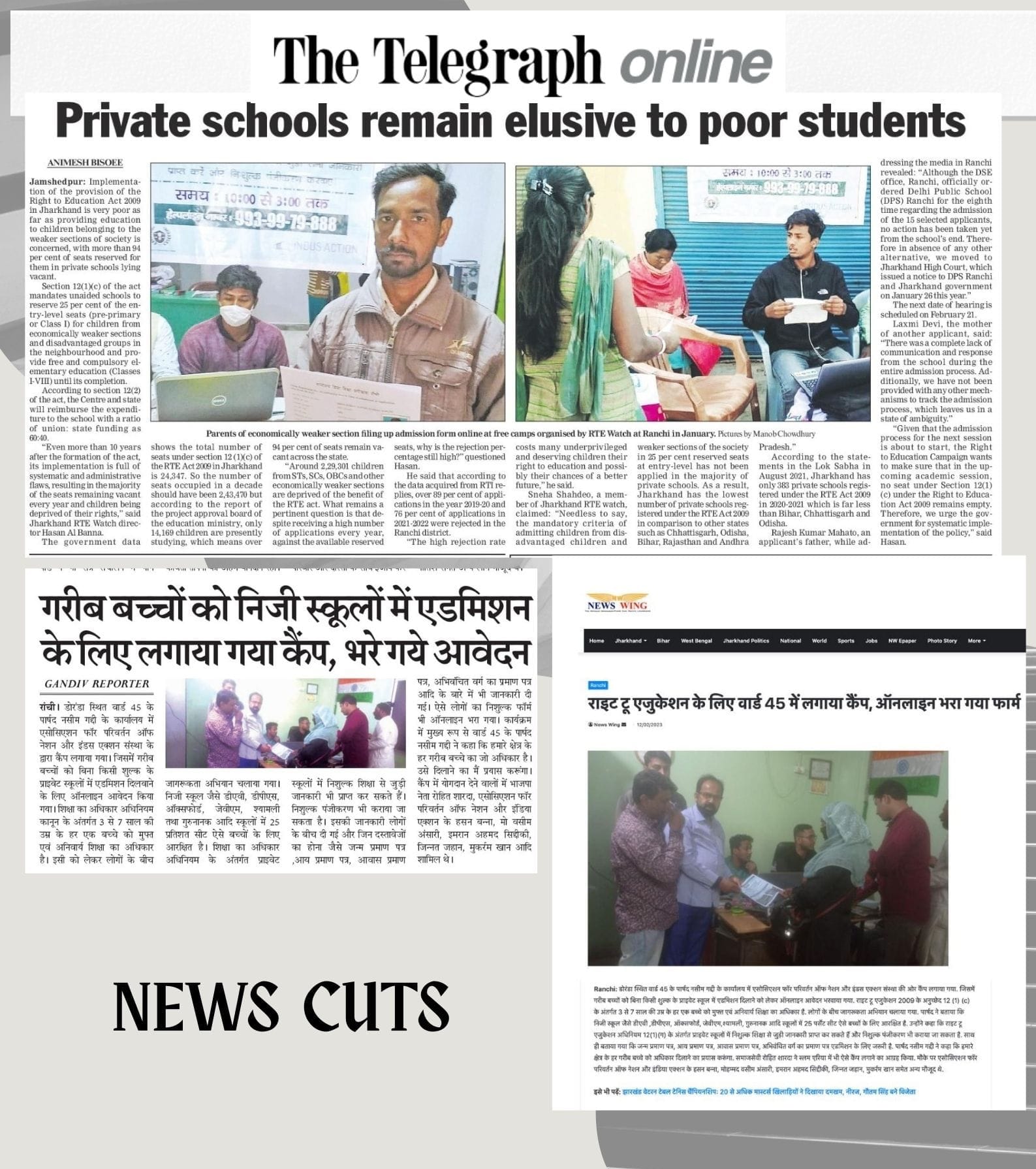
From Jan–Mar 2023, APNA’s Project 21A with Indus Action and SKA, reached 1,200+ families in Ranchi and Bokaro, offering RTE 12(1)(c) support through Shiksha Seva Kendras. With help on forms, documents and grievances, parents gained confidence and admissions rose—turning exclusion into empowerment.
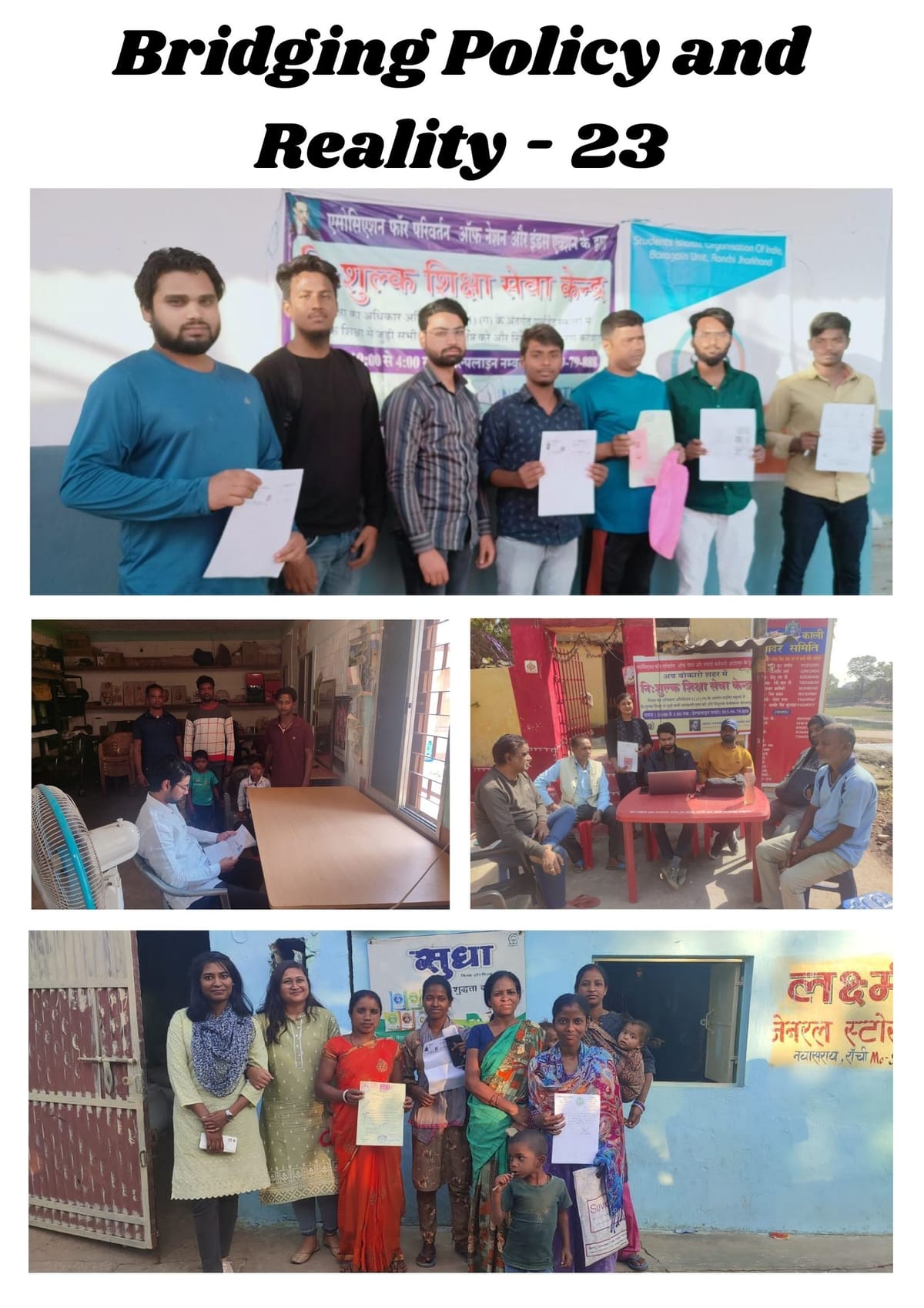
Between January and March 2023, Project 21A, the flagship initiative of APNA, intensified its efforts to ensure equitable access to education under Section 12(1)(c) of the Right to Education Act (RTE), 2009. Operating in Ranchi and Bokaro districts of Jharkhand, the project reached over 1,200 families, transforming awareness into action and empowering communities to claim their children's constitutional right to education. The project was held in collaboration with Indus Action (Ranchi), Safai Karamchari Andolan (Bokaro).
What began as a legal awareness campaign evolved into a grassroots movement, driven by one simple yet powerful belief:
“Every child deserves a chance to learn, grow, and dream- regardless of where they are born.”
At the core of Project 21A were the Shiksha Seva Kendras (Education Service Centres), which became safe, welcoming spaces where parents could seek real-time, practical support to navigate the RTE application process. These centres were set up in high-need areas such as Tharpakhna, Doranda, Harmu Road, Bundu (Ranchi), Kali Mandir Compound (Sector 4), and Co-operative Colony (Bokaro).
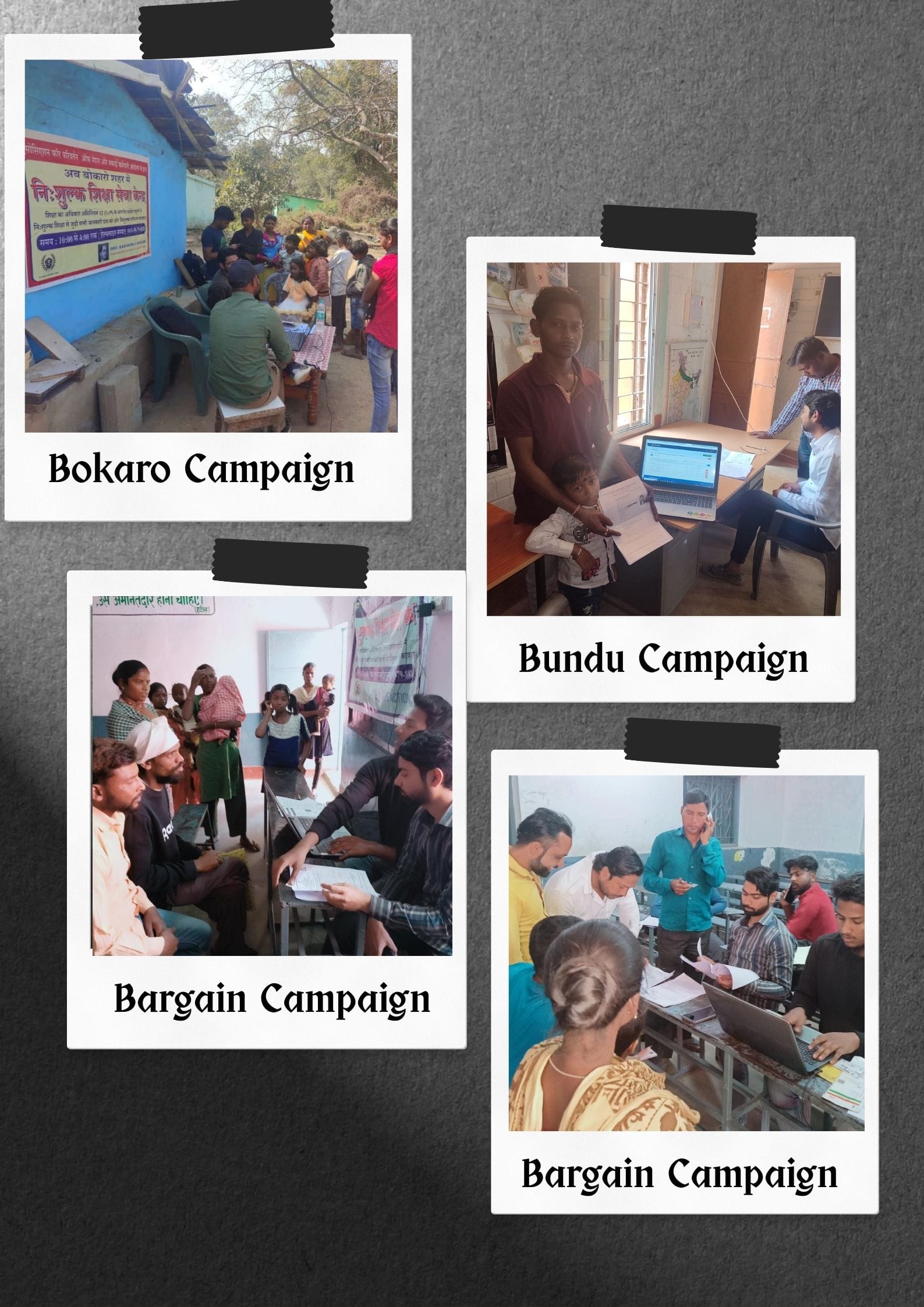
The key services offered include:
Form-Filling & Application Guidance: Trained volunteers helped parents fill out online/offline admission forms- often sitting for hours to ensure every detail was correct.
Document Verification & Corrections: Families were assisted with gathering, verifying, and correcting key documents like birth certificates, income certificates, and residential proofs.
Grievance Redressal & Follow-Ups: Persistent follow-up with both parents and schools ensured that children were not denied admission due to clerical errors or procedural delays.
“Before coming here, I was overwhelmed by the paperwork. The volunteers didn’t just guide me—they sat with me and made sure every form was filled correctly. Today, my child goes to school because of their support,” shared Meena Devi, a mother from Ranchi.
“We realised that the problem isn’t just access- it’s the system’s complexity. Our Kendras became decoding zones, where families learned to see education as a right, not a privilege,” Sapna, APNA team member.
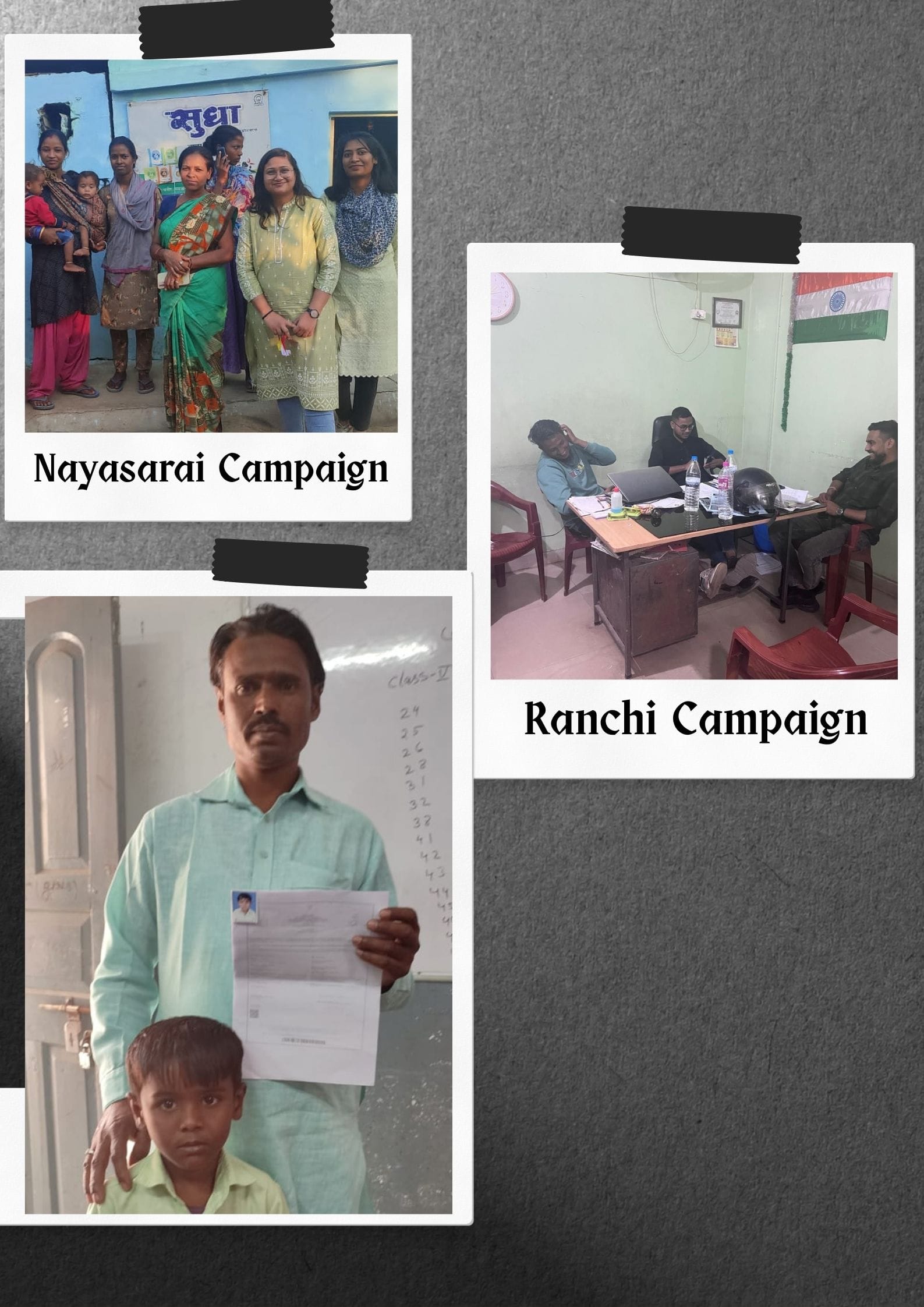
What makes Project 21A impactful is not only the number of children supported, but the shift in narrative it creates, moving from confusion to confidence, from exclusion to inclusion. Parents who once hesitated to approach schools now return to the Kendras with neighbours and relatives, eager to share what they’ve learned. Children who once stayed home now walk to school with uniforms and books, small steps that signify big wins for dignity and equality.
Project 21A, in just three months, demonstrated what’s possible when policy meets people, and when systems are supported by compassionate fieldwork and committed partnerships. “The promise of education under RTE is only fulfilled when a parent walks out of a system feeling heard, not defeated.” With continued support and collaborative will, APNA remains committed to making sure that no child in Jharkhand- or anywhere- misses school because of paperwork or silence.