Education as Justice: APNA’s Field Intervention in Ranchi
APNA held an Access to Justice Camp in Ward 35, Ranchi, to raise awareness on RTE 12(1)(c). Over 120 parents attended, 46 families received legal support, and 32 children began EWS applications. The camp reinforced education as a tool of justice and APNA’s commitment to bridging inequality.
In India, education is constitutionally recognised as a fundamental right under the Right to Education (RTE) Act, 2009, which guarantees free and compulsory education to all children aged six to fourteen years. Yet, despite this legal safeguard, access to quality education remains elusive for millions of children, particularly those from marginalised communities. According to the United Nations Development Programme (UNDP, 2014), 42.1% of India’s population experiences educational inequality- a statistic that starkly underlines the gap between constitutional promise and lived reality. To bridge this divide, Section 12(1)(c) of the RTE Act was introduced as a transformative measure, mandating private unaided schools to reserve 25% of their seats for children from Economically Weaker Sections (EWS) and Disadvantaged Groups (DG). This provision was envisioned not merely as a welfare scheme but as a means to foster social integration and create equitable access to quality education.
At APNA, we believe that education is justice in action. The denial of education is not just a developmental failure- it is a systemic injustice that reinforces poverty, gender disparity, and caste-based exclusion. Our work under the RTE awareness and access initiative seeks to dismantle these barriers through community engagement, legal assistance, and policy advocacy.
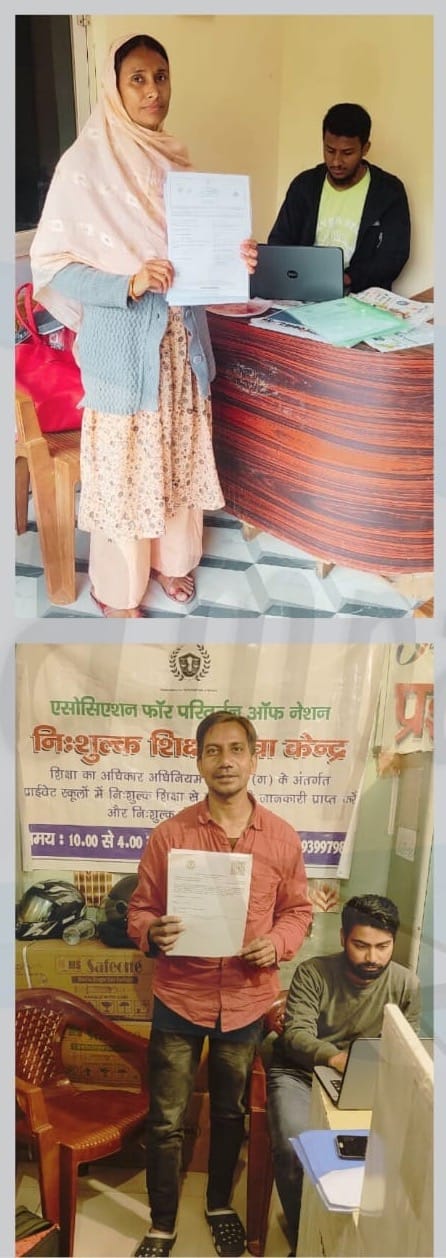
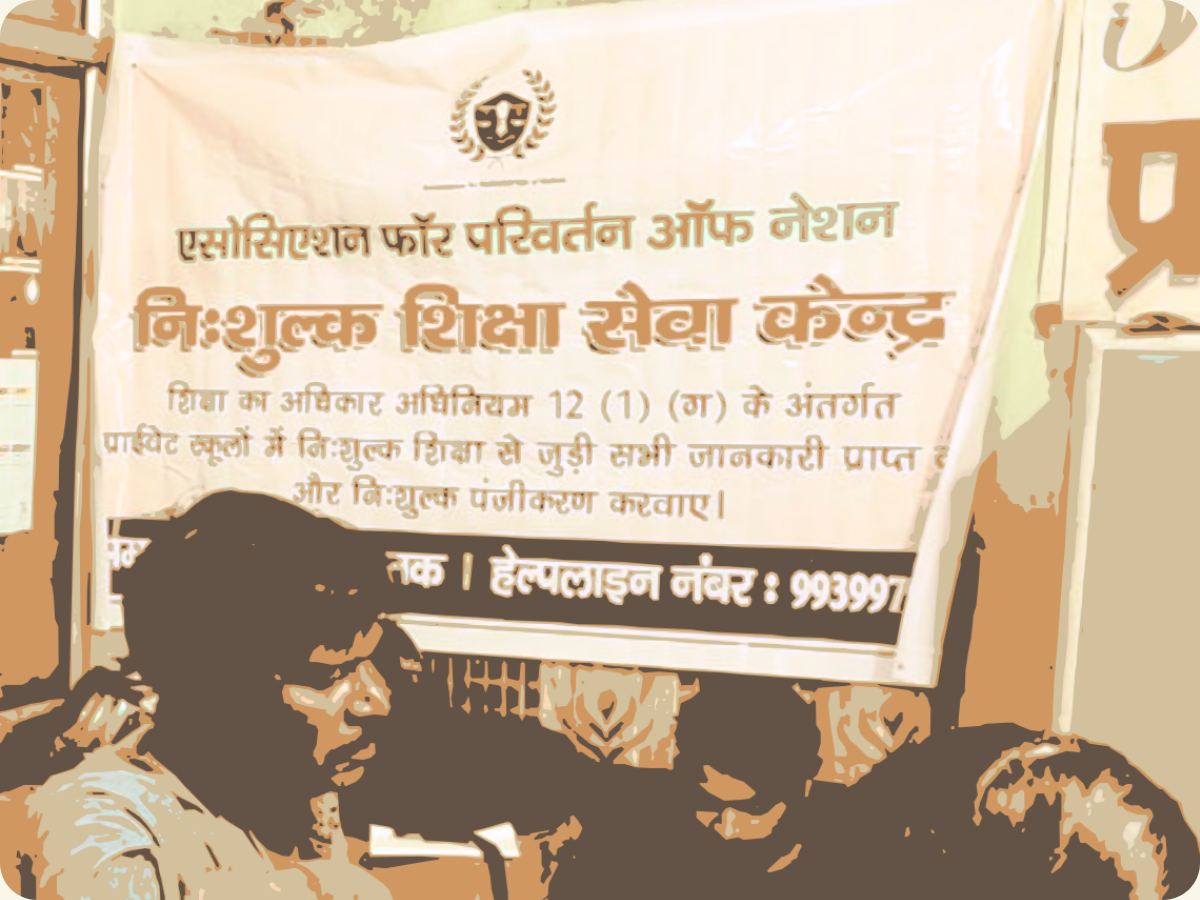
On 14 March 2024, APNA organised an Access to Justice Camp in Ward No. 35, Ranchi Municipal Corporation, as part of its ongoing RTE Campaign. The event drew over 120 parents and guardians, alongside teachers, local councillors, and volunteers. The aim was to demystify the RTE Act and guide families through the admission process under Section 12(1)(c).
“Many parents are unaware that their children are entitled to seats in private schools,” explained Shubham Raj, APNA’s field coordinator for Ranchi. “Our role is to bridge that gap to ensure information translates into action and action into justice.”
Through interactive sessions, visual aids, and case demonstrations, the team walked participants through eligibility criteria, required documentation, and the online application process. APNA’s legal volunteers also provided one-on-one counselling to 46 families, helping them prepare applications for the 2024-25 academic year. One of the participants, Kamla Devi, a domestic worker from Naya Sarai, shared her experience:
“I never knew my son could study in a private school. People told me it was only for the rich. Today, I feel hopeful, like my child’s life could take a new turn.”
The event also saw participation from local councillor Jamila Khatoon, who commended the initiative, stating, “Education is the foundation of dignity. When organisations like APNA step in, they help the government’s vision reach the people who need it most.”
By the end of the camp, 32 children had initiated applications for admission under the EWS quota. Follow-up support is being provided by APNA’s field team to ensure these children are successfully enrolled and retained in schools.
While the outcomes of such interventions are immediate and measurable, their long-term impact lies in changing perceptions. Parents who once viewed private education as unattainable are now asserting it as their right. Community leaders are beginning to recognise the RTE Act not as a distant policy, but as a living instrument of equality. Through such initiatives, APNA continues to reaffirm its belief that access to education is the truest form of justice- one that uplifts, empowers, and transforms lives across generations.