
Earth Day 2026: the bond between culture and nature
This Earth Day 2026, read about APNA’s grassroots initiatives and our annual Tribal Echoes campaign event which fosters the bond between culture and nature.
“Why do you care so much about the environment?”
“Because I live in it.”
That was a post that did the rounds on social media a while ago and if the comments section revealed anything, the message really hit home for a lot of people. The environment is usually thought of as some space “out there”. But really, it is about the land we build our homes upon, the crops we harvest, the food we eat, the air we breathe, the water we drink and the families we live with. Unbeknownst to most of us, our lives are shaped by the earth around us. For example, we shape our lives around the climate in terms of our diet or clothing and any changes create ripple effects that alter the way we live our lives.
Being good custodians of the planet is not just something we should be responsible for; it is crucial for the survival of all life forms on the planet - including each one of us. This is the central message of Earth Day, which is celebrated each year to shine the spotlight on the impact of human activities on the planet, provide a platform to brainstorm and discuss successes and shortcomings, connect with individuals and organizations to make an actionable plan and implement real changes on ground. Earth Day, although celebrated on just one day, is meant to be observed throughout the year and in all areas of our lives.
What is Earth Day
Earth Day is celebrated each year on April 22nd to raise awareness about fast changing issues that are affecting life on the planet. Earth Day was envisioned by an American activist in the late sixties and later adopted by the United Nations (UN) in 1970. In its initial days, it sought to organize grassroots teaching sessions on subjects of environmental concern and this later spread across the United States and then to the rest of the world. In India, Earth Day is celebrated across schools, colleges, offices, neighbourhoods and homes. It gives people the chance to express their thoughts about issues that are important to them.
Although Earth Day is celebrated on April 22nd, it is common to have week-long celebrations or even month-long observances focusing on a different theme or even different activities each day. For 2026, the theme for Earth Day is Our Power, Our Planet and this zeroes in on the need to switch to cleaner and greener sources of energy and the reason we should be doing so. If we think about the conversations we hear around us or on the news, the transition to renewable sources of energy is one of the major topics of discussion. The negative impact of fossil fuels, such as coal or oil, has devastating consequences and this is becoming increasingly evident.
The activities that are organized, especially in classrooms, include essay writing, debates, poster making, painting and other creative forms of expression that allow students to think about their relationship to the world around them and what troubles or concerns them regarding the present state of affairs. For example, as a part of our poster making competition for school students, one of the children expressed that “people’s apathy toward the environment scares me.” This highlighted the young student’s fear that his concern alone is not enough; there should be a collective effort to make a real change.
When provided with the platform to share our experiences, there is no dearth of insight and information that emerges from people. These voices often change the way we regard our connection to the land around us and also impacts our work in the area of environmental protection and preservation. In our grassroots initiatives with tribal communities in the larger Jharkhand area, our conversations and engagement with diverse groups of people allow us to bring issues and concerns to a global platform. This platform serves to bridge the divide between communities and systems; a divide caused by a lack of opportunities to listen and learn.
Tribal Echoes
Tribal Echoes is an annual event conducted by APNA and takes place over three days. The event features interactive panel discussions, lectures, creative arts and cultural activities. Held on the death anniversary of the tribal activist and folk hero Birsa Munda, Tribal Echoes brings together individuals from marginalized communities and focuses on a different theme each year which reflects the issues and injustices faced by people in multiple spheres of life, such as college campuses. Led by scholars, professors, academics, activists, artists and community leaders, Tribal Echoes is a space to listen, learn, explore and act.
In our fourth edition of Tribal Echoes, we held an essay writing competition in which one of the participating students drew parallels between the activism of the tribal freedom fighter Birsa Munda and present day environmental movements. For this student, as well as the others who participated, the platform to express his thoughts was the first step to sharing what he deemed important in his world. The subsequent conversations sparked by his essay connected him with others who shared his thoughts, elaborated on his points and led to a productive discussion on youth and their thoughts on the relevance of resilience in the modern world.
In another one of our Tribal Echoes cultural activities, we held a painting and drawing competition encouraging participants to express tribal traditions and environmental awareness through colour and art. One of the student’s artwork featured a colourful piece depicting Birsa Munda standing beside traditional tribal huts in the forest. Her artwork sought to illustrate the deep bond between her culture and nature. These cultural narratives, which are often expressed by children and young people, join together to form a larger picture of the relationship between communities and the natural world around them.
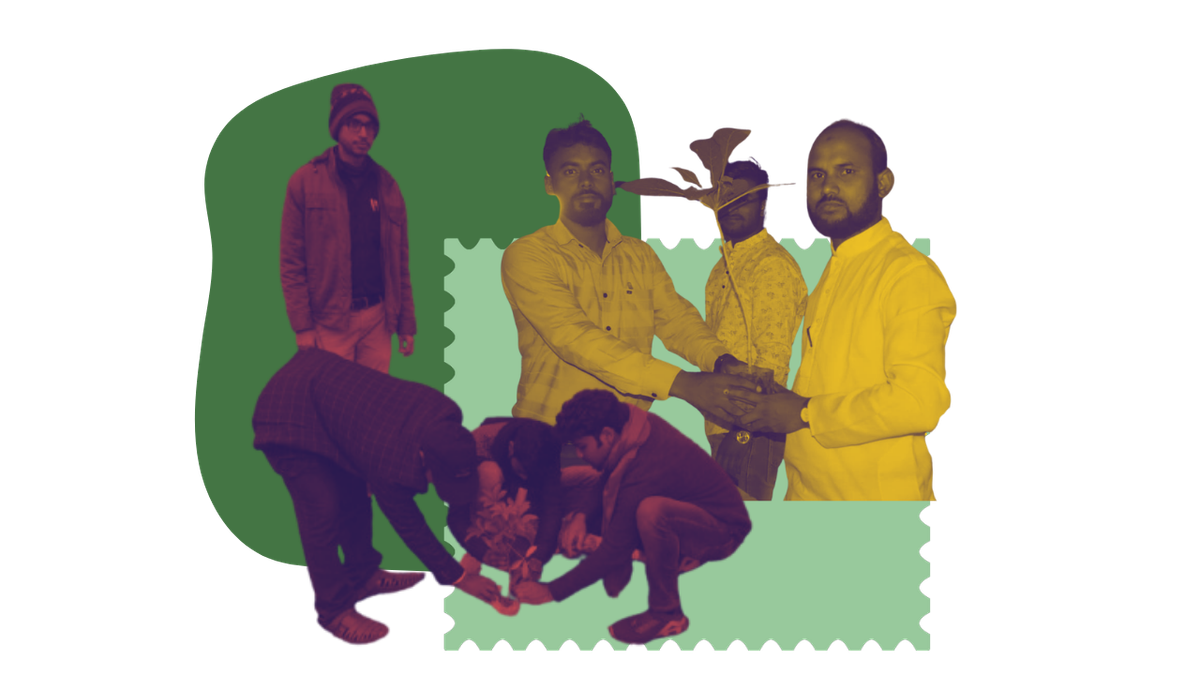
In addition to expressing this relationship through writing, painting and other creative activities, APNA has designed more actionable initiatives to build individual and collective responsibility toward our surroundings. One of these initiatives include the distribution of more than 100 tree saplings to community members for tree plantation drives that were organized to instill a sense of shared responsibility amongst the participating members. Through these activities, students and community members learned the importance of understanding and upholding the connection between the environment and their tribal heritage.
Earth Day 2026
This Earth Day 2026, there are a multitude of activities that can be organized and conducted in our homes, classrooms, offices and neighbourhoods to spark conversations around our relationship to the natural world around us and our duty toward being responsible guardians. This transcends conservation of the natural world. From what was learned in our Tribal Echoes activities, environmental preservation has a direct correlation to our cultures, languages, habits and the manner in which we conduct our lives. This Earth Day, it is worthwhile exploring this relationship and keeping its spirit alive.